Showing posts with label photography. Show all posts

Monday, May 4, 2015

Abigail// Flower Goddess

Let me just say that Abby's hair is amazing, it's long, curly, and voluminous. Thus making it perfect to stick flowers in. 
Enjoy. 


Friday, April 17, 2015

Love of Stage

After the war ended Beaton started working on his first love, theatrical productions. One well known production was Lady Windermere's Fan in 1945. "Beaton lavished color and style to serve as a tonic for post war Britain." (Beaton, & Vickers 6). 

Cecil Beaton (1946)
On the set of Lady Windermere's Fan
National Portrait Gallery 
He took part in many other productions like The School for Scandal and Quadrille. The most famous Beaton production though is My Fair Lady (1956). 

Cecil's famous Ascot costume 
Beaton designed the ascot dress and hat for Audrey Hepburn to wear in the movie. The dress was the most memorable costume from the production. Beaton looked back to his childhood to create the costumes for this movie. His Aunt Jessie served as one of the main sources of inspiration. He remembered people dressing like this, and knew Black Ascot because when he was a little boy it was in the papers which Beaton loved to look at. 

Cecil Beaton's sketch for My Fair Lady

The costume design was very different for the era. Beaton said "For me, coming out of punk and the New Romantics, Ascot was a little like sleeping with the enemy. However much I might balk at conservative society, that was always balanced by the Ascot scene from My Fair Lady which was genius." (The Independent)

Scene from My Fair Lady
The Independent 


 Beaton, C., & Vickers, H.  (2003). The unexpurgated Beaton: the Cecile Beaton diaries as he wrote them, 1970-1980. New York, NY: Alfred A. Knopf.


"On the set of Lady Windermere's fan". (2015). National Portrait Gallery. from http://www.npg.org.uk/collections/search/portrait/mw67894/On-the-set-of-Lady-Windermeres-Fan

Rogers, L. (2014). My Fair Lady costumes. History Room. Retrieved from http://lisawallerrogers.com/tag/my-fair-lady-costumes/

"How to trot: a royal ascot is the ultimate hat parade."(2015). Independent. Retrieved from http://www.independent.co.uk/life-style/fashion/features/hot-to-trot-royal-ascot-is-the-ultimate-hat-parade-2294616.html?action=gallery&ino=6

Thursday, April 16, 2015

World War II

During World War II Beaton became a war photographer. This was a completely new territory for Beaton but he succeeded. He did such a great job capturing the war that the Ministry of Information hired him to capture different aspects of the war effort in Britain, the Middle East, and the Far East. (Six books were made out of these photographs). 

Arguably his best and well known photograph from the war was taken over a year before the U.S. entered the war. The picture was of a 3 year old girl Eileen Dunne. Eileen was in the hospital because a German bomber's crew dropped a bomb on her North England Village. A splinter from it hit Eileen. Beaton's photo of her was powerful and used as propaganda to grab the attention of Americans who felt the war was far away. 

Life Magazine, September 23, 1940

Beaton took many other moving pictures from the war (which I will post below). These pictures show  a different, refreshing side of Beaton.


A man and his daughter pass posters in Cairo, Egypt, 1942
Cecil Beaton/Imperial War Museum 

A sailor on board HMS Alcantara uses a portable sewing machine
to repair a signal flag during a voyage to Sierra Leone
Cecil Beaton/Imperial War Museum 

Men of the Long Range Desert Group after returning to
headquarters at the end of a desert patrol, Siwa, Libya, 1942
Ccecil Beaton/Imperial War Museum 

Bomb damage to the church of St Lawrence Jewry, Guidhall,
London, 1940
Cecil Beaton/ Imperial War Museum 

Bomb damage to a fire station, Tobruk, Libya, 1942
Cecil Beaton/ Imperial War Museum 

The Blitz, London, 1942. A workman with a wheelbarrow clears
up fallen debris from the roof of St Mary-le-Bow after its
first bombing.
Cecil Beaton/Imperial War Museum 

A British Sailor on shore leave, Harrogate, 1941
Cecil Beaton/Imperial War Museum 

A wren serving with the crew of a harbor launch in Portsmouth,
1941
Cecil Beaton/Imperial War Museum 

Flying Officer Neville Duke of NO 93 (East India) Squadorn.
Duke was a battle of Britain and is pictured here with his Spitfire at RAF
Biggin Hill in 1941.
Cecil Beaton/Imperial War Museum 

A welder works on the deck of a new ship, Tyneside, 1943
Cecil Beaton/ Imperial War Museum 

Villagers cross duckboards over floating bamboo poles, Guangxi,
China 1944. The poles are being soaked in fresh water to prepare
for construction use.
Cecil Beaton/Imperial War Museum 

China, 1944: the Chinese assistant chief of police and his staff grouped
in a circular doorway at headquarters in Chengdu
Cecil Beaton/Imperial War Museum 

Bomb damage to HMV gramophone shop, Oxford Street, London
1940.
Cecil Beaton/ Imperial War Museum 


Beaton, C., & Vickers, H.  (2003). The unexpurgated Beaton: the Cecile Beaton diaries as  he wrote them, 1970-1980. New York, NY: Alfred A. Knopf.

Ronk, L.(2015). Cecil Beaton’s war child: portrait of victim of the blitz. USA Today.  Retrieved from: http://life.time.com/history/cecil-beaton-portrait-of-eileen   dunne  1940-london-blitz/#1

The Guardian. (2012) "Cecil Beaton's rare war photography- in pictures. Retrieved from http://www.theguardian.com/artanddesign/gallery/2012/aug/31/cecil-beaton-war-photography-pictures

Vickers, H. (1985). Cecil Beaton: A biography. Boston, MA: Little Brown.

Wednesday, April 8, 2015

Cecil Beaton | The Early Years

Cecil Beaton was born January 14th 1904 in Hampstead. He was one of four siblings. It's said that being born in the Edwardian Era greatly influenced his personality.  Beaton was quite fond of his mother and aunt Jessie (Aunt Jessie was elaborate and loud, and later served as inspiration for My Fair Lady.) Being so fond of them, he often chose to hang out with them rather than do other "boyish" things. Being around them so often they observed that he "always sought out the detail rather than the conception as a whole" (Beaton, & Vickers, 2003, p.8).

Another source of inspiration was a postcard of Lily Elsie he found when he was young. Her hair was pilled on top of her head. 
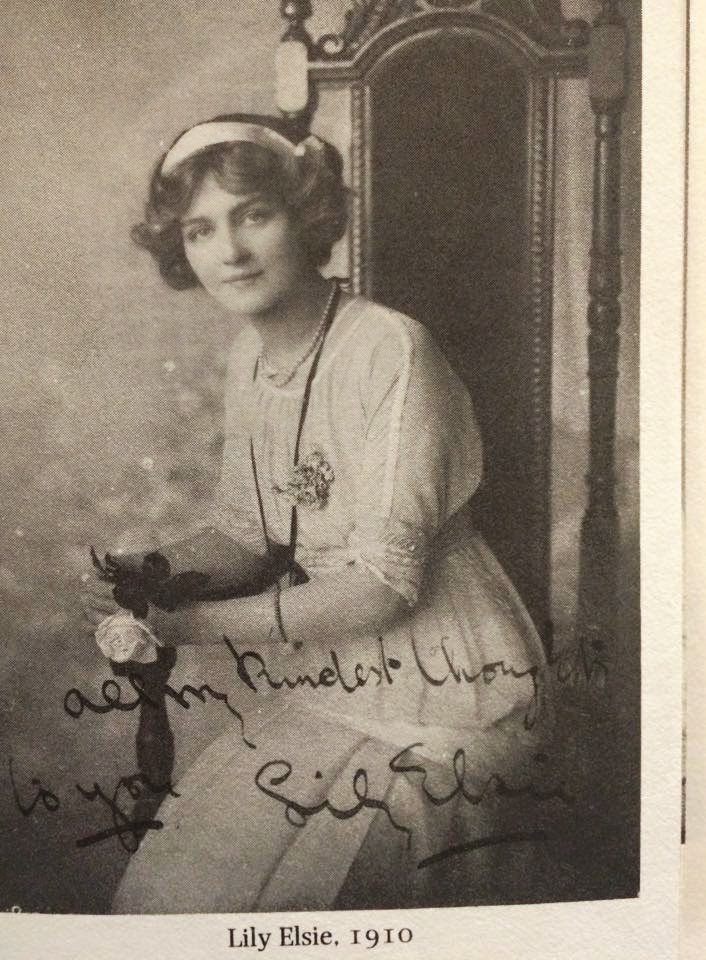
(The unexpurgated Beaton: the Cecile Beaton diaries as he wrote them, p. 99)

Cecil said "The beauty of it caused my heart to leap." Then began his interest in photography. 


Whenever Cecil went for walk he would stop at local stationers just to look at the postcards that were displayed. He would also look at magazines and cut out pictures of Gertie Millar, Florence Smithson, and Gaby Deslys. He would also intently study photographs of stage sets and designs through a magnifying glass. 

When it was time for Beaton to go to school he was enrolled at Heath Mount Preparatory school. During his time there he was often bullied by the kids. He wasn't like the other boys at school. He subscribed to the 'Captain' a schoolboy's weekly and would spend his time cutting out portraits of the actresses and paste them into a scrapbook. 

After three years at Heath Mount, his parents then sent him to Harrow boarding school. Beaton wasn't good at school and hated sports. He loved art though and would take part in school plays by dressing up and creating backdrops. 

During his days at Harrow he became an amateur photographer. He knew what he wanted to create but wasn't very skilled on the technical side of photography. Luckily, his family nanny (Alice Louise Collard) fondly known as "Ninnie" was a keen photographer. She was able to take great photos and print her own films. She showed Beaton how to take pictures and taught him the technical photography skills he needed. They had an interesting relationship, she didn't quite understand his eye and he often grew quite jealous of her ability to take great pictures. 

After Harrow, Beaton (through persuading from others) decided to go to Cambridge. Just like when he was enrolled at Harrow, he didn't really care for school and was more interested in the arts. He would have his friends take pictures of him to send into the newspaper. The newspaper would often publish the pictures along with a little blurb about a play he was in or designing for. 

Throughout his school years and even after, Beaton struggled with accepting his homosexuality. 
"I'm really a terrible, terrible homosexualist and try so hard not to be. I try so terribly hard to be good and not cheap and horrid..." (Beaton & Vickers, 2003, p. 40).

Beaton graduated Cambridge and wasn't quite sure what to do with himself. He knew one thing for sure, he didn't want to work for his dad in the family business. While he was "searching" for a job he often would take pictures of his sister and mother and send them into different publications. 
Beaton's sisters Nancy and Baba
(The unexpurgated Beaton: the Cecile Beaton diaries as he wrote them, p. 99)
One time at a social event Beaton ran into the editor of Vogue, Dorothy Todd and she told him that he sends in good photographs but sends them in much too late and to try sending them ten days before print. 

Cecil couldn't find a job so eventually he ended up working for his dad as a clerk. After eight days he quit. Beaton tried to find work on his own but couldn't. His dad set him up with a business man Schmeigelow. His dad wanted him to start out at the bottom and work his way. Beaton enjoyed Schmeigelow but after awhile couldn't handle the business environment anymore and quit. 

Eventually Beaton got his first "break." He was went to a tea party at Allanhan's. He had taken pictures of her before and had them with him. The pictures were discovered and the women at the party went crazy for them. Beaton then began taking pictures of "bright young things" in society, launching his career. 


Resources
Beaton, C., & Vickers, H.  (2003). The unexpurgated Beaton: the Cecile Beaton diaries as he wrote them, 1970-1980. New York, NY: Alfred A. Knopf.

Vickers, H. (1985). Cecil Beaton: A biography. Boston, MA: Little Brown.